Why Every Consumer Electronics Brand Needs an AI Companion — Not Just a Manual
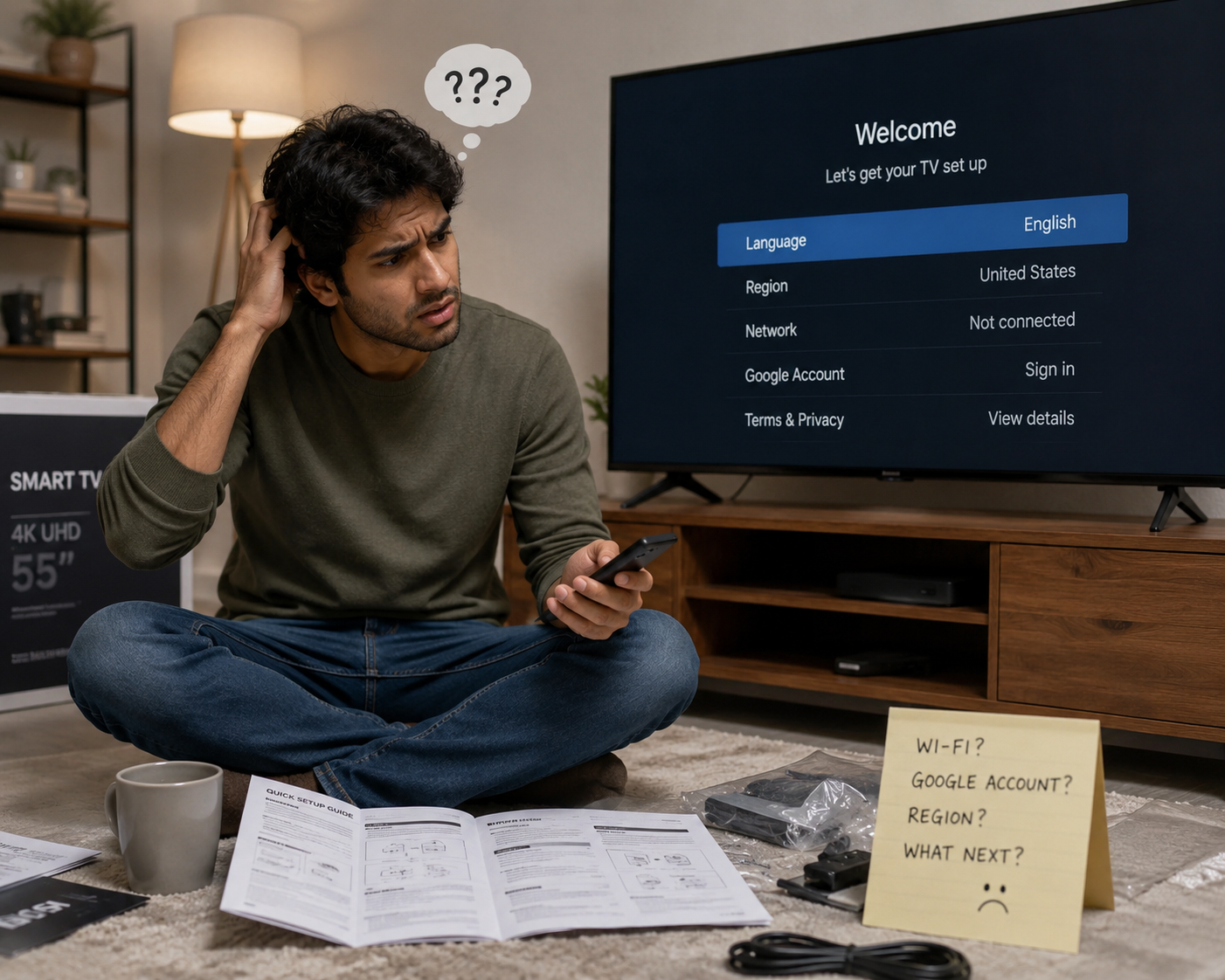
A few weeks ago, I watched a friend spend nearly an hour setting up a new smart TV.
The TV wasn’t broken. The instructions weren’t missing. The problem was much simpler: the product had become smarter than the setup experience. After navigating endless menus, searching through online forums, and watching a couple of YouTube videos, he finally got everything working. But by then, the excitement of buying a new product had already disappeared.
And it made me wonder:
Why are we still asking customers to learn products the same way we did twenty years ago?
Today’s consumer electronics can recognize voices, connect with dozens of devices, personalize experiences, and update themselves automatically. Yet when customers get stuck, most brands still hand them a manual, an FAQ page, or a customer support number.
The products evolved. The support experience didn’t. And that’s becoming a serious problem.
The Modern Product Experience Is Broken
Consumer electronics have never been more advanced.A smart speaker can control your entire home. A smartwatch can monitor your sleep, heart rate, and activity levels. A smart TV can recommend content, integrate with multiple streaming platforms, and connect to an entire ecosystem of devices.
These products are incredibly powerful. But they’re also increasingly complicated.
Every year, companies add new features, integrations, settings, and capabilities. From a product perspective, that makes sense. Customers want more value, and brands want differentiation.
The unintended consequence is that products are becoming harder to understand. Most customers don’t struggle because the product is bad. They struggle because nobody teaches them how to unlock its full value.
Let’s Be Honest: Nobody Reads Manuals Anymore
Think about the last product you bought. Did you sit down and read the entire manual? Probably not. Most people don’t.
When customers encounter a problem, they don’t want to search through a PDF, browse support articles, or spend thirty minutes on hold. They want an answer immediately. If their soundbar isn’t connecting, they want to know why.
If their washing machine is showing an unfamiliar icon, they want an explanation. If their smartwatch isn’t syncing, they want a solution. Customers don’t care where the answer comes from. They care about solving the problem as quickly as possible. That’s where traditional support starts falling apart. Manuals are static. Products are dynamic.
A product might receive software updates, new features, interface changes, and integration improvements throughout its lifecycle. Meanwhile, the manual often remains exactly the same.
In many cases, the customer is trying to understand a product that has already evolved beyond its original documentation.
The Hidden Cost of Product Complexity
There’s another issue that brands often overlook. Most customers use only a fraction of the features available to them. A smart washing machine may have fifteen specialized wash cycles. The owner uses two. A fitness watch might provide advanced health insights. The user checks only the step count. A premium audio system may offer room calibration and personalized sound profiles. Most customers never discover them. Think about that for a moment. Companies spend months designing, developing, testing, and marketing features that many users never touch. Not because the features aren’t valuable. Because customers don’t know they exist.
This creates what I like to call the “product understanding gap” — the growing distance between what a product can do and what customers know it can do.
And that gap is costing brands far more than they realize.
Enter the AI Companion
Imagine buying a product that could explain itself. Not through a manual. Not through a support article. Not through a chatbot that keeps asking you to choose between options 1, 2, or 3. But through a natural conversation. That’s what an AI Companion can become. An AI Companion acts like a product expert that’s available whenever customers need help. Instead of searching for information, customers simply ask questions in their own words.
“Why isn’t my TV connecting to Wi-Fi?”
“How do I improve the battery life on my smartwatch?”
“What does this blinking light mean?”
The AI understands the question, identifies the issue, and guides the customer toward a solution. The interaction feels less like technical support and more like getting help from someone who knows the product inside out.
More Than Customer Support
This is where many brands misunderstand the opportunity. An AI Companion isn’t just a support tool. It’s a product experience tool.Support usually enters the picture after something has gone wrong. An AI Companion can help long before that happens. Imagine a customer using a smart appliance for the first time.
The AI notices that they’re repeatedly using the standard settings. It suggests features they haven’t explored. It explains how to achieve better results. It helps them get more value from the product. Instead of solving problems, it’s helping customers succeed. That’s a very different role. And a much more valuable one.
What This Could Look Like in Real Life
Picture a customer setting up a smart home system. One device isn’t connecting. Normally, this would lead to a Google search, a support article, or a frustrating call to customer service. With an AI Companion, the customer simply says:
“My bedroom light won’t connect.”
The AI immediately understands the context, identifies the likely cause, and walks them through the fix. Or imagine someone who has just purchased a premium fitness watch.
After a week of use, the AI says:
“I noticed you’re tracking your workouts regularly. Would you like to learn how recovery scores can help improve performance?”
Suddenly, a hidden feature becomes something useful and meaningful. The product feels smarter. The customer feels supported. And the brand gets more value from the features it already built.
Why Brands Should Care
For many companies, the biggest benefit will be fewer support tickets. That’s important. But it’s not the most exciting outcome. The real value lies elsewhere. When customers understand products better, they use them more.
When they use them more, they discover more value.
When they discover more value, they become more satisfied.
Satisfied customers are less likely to return products.
They’re more likely to recommend them.
They’re more likely to stay loyal to the brand.
In other words, better guidance creates better business outcomes.
The relationship is surprisingly simple.
The easier a product is to understand, the more successful it becomes.
The Future of Consumer Electronics
For years, companies competed by building better hardware.
Faster processors. Better displays. Longer battery life. More features. Those things still matter.
But they’re becoming easier for competitors to replicate.
The next major competitive advantage may not come from the product itself.
It may come from how well the product guides its users.
The brands that win won’t necessarily be the ones with the most features.
They’ll be the ones that help customers get the most value from those features.
An AI Companion represents a shift in thinking.
Instead of assuming customers will figure things out on their own, brands can actively help them succeed.
And that changes the entire ownership experience.
A Question Every Product Leader Should Ask
For decades, support has been treated as something separate from the product.
The product team builds.
The support team fixes.
But perhaps that’s the wrong way to think about it.
If customers consistently struggle to understand a product, is the product truly finished?
Or have we simply outsourced part of the experience to manuals, FAQs, and call centers?
The best products of the future won’t just be intelligent.
They’ll be self-explanatory.
They’ll guide users, answer questions, and help people unlock their full value without forcing them to search for answers.
Because in a world where products are becoming smarter every year, the experience of owning them should become smarter too.
And that’s exactly where AI Companions fit in.